OGP at 15: Discussing a New Phase in Which Trust, Resilience, Democratic Security and Partnership Should Become the Foundation for Future Decisions
- May 25
- 6 min read
On 22 May 2026, a high-level strategic dialogue, “OGP at 15: Time for a New Phase of International Partnership, Open Governance, Trust, Security and Democratic Resilience,” was held as a platform for joint reflection on the 15-year journey of the Open Government Partnership (OGP), and for discussing the next stage of its development amid war, recovery, security challenges and the transformation of democratic governance. A dedicated focus of the event was the presentation of the TRUSTA Strategic Action Framework, which outlines seven ambitious commitments:
Developing a model for cooperation within the framework of public-private-civil society
partnerships (PPCsP) in the European security architecture, based on OGP principles and standards;
Information security through democratic resilience, trust, partnership, and reliable AI;
Ukrainians abroad as co-creators of governance: A shared platform for participation and expert collaboration;
Implementation of a model “Community Safety Passport”;
Establishment of a comprehensive, multi-tiered mechanism for monitoring (screening) foreign direct investment (FDI) in Ukraine;
Strengthening transparent public governance through data, artificial intelligence, and impact assessment (the Ukrainian CEDAR pilot);
Parliamentary accountability in security and reconstruction reforms: open monitoring of legislative commitments.
Representatives of the Verkhovna Rada of Ukraine, the Ministry of Economy, Environment and Agriculture of Ukraine, the Ministry of Digital Transformation of Ukraine, the Ministry of Defence of Ukraine, the Ministry of Internal Affairs of Ukraine, the National Police of Ukraine, the State Emergency Service of Ukraine, the Office of the Deputy Prime Minister for European and Euro-Atlantic Integration of Ukraine, the Secretariat of the Cabinet of Ministers of Ukraine, the Commissioner for Information Rights of the Secretariat of the Ukrainian Parliament Commissioner for Human Rights, the National Institute for Strategic Studies, and the OGP Local Initiative expressed interest in participating in the strategic dialogue and the implementation of TRUSTA. The event was organised by four countries: Ukraine, the United Kingdom, Germany and Moldova. Representatives of Belgium, Poland and Switzerland also joined the dialogue.
The Voice of Partnership: Welcoming Remarks and Strategic Messages
During the event, welcoming remarks brought important additional dimensions to the common conversation - on the role of civil society, openness as a foundation of resilience, the value of information rights, and the inseparable connection between democratic governance and security.

Yaroslav YURCHYSHYN, Member of the Verkhovna Rada of Ukraine (Parliament of Ukraine), Co-chair of the inter-factional parliamentary association “Open Parliament of Ukraine”, Chairman of the Committee of the Verkhovna Rada of Ukraine on Freedom of Speech, emphasised the special role of civil society as an active partner of the state - one capable of assuming responsibility and not remaining aside from key transformations.
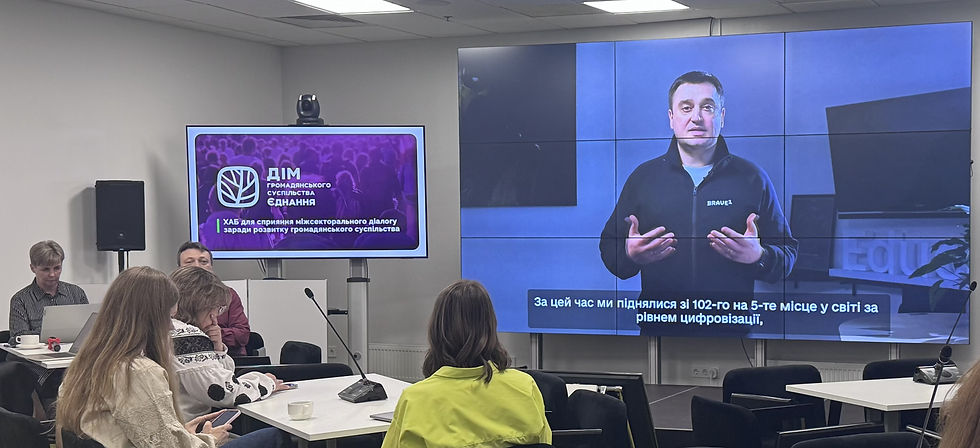
Continuing this logic, the next intervention focused on how innovation and digital tools can strengthen not only the effectiveness of the state, but also its resilience. Oleksandr BORNYAKOV, Acting Minister of Digital Transformation of Ukraine, underlined:
“The vision of the Ministry of Digital Transformation remains unchanged - we are building the most convenient and open digital state in the world. Ukraine has become a global example of how innovation strengthens institutional resilience. Openness remains the foundation of national security and resilience. That is why Ukraine fully supports the new TRUSTA Strategic Action Framework. Responsible AI in the public sector and open data are the tools through which we can build a digital democracy capable of withstanding any crisis.”

Another important dimension of the discussion was outlined by Yuliia DERKACHENKO, Representative of the Ukrainian Parliament Commissioner for Human Rights on Information Rights. She emphasised that even in wartime, the state is obliged to preserve openness, democracy and the value of human information rights, while citizen engagement in decision-making becomes especially significant.

Paul MAASSEN, Deputy Chief Executive Officer of the global Open Government Partnership, raised the discussion to a broader international and strategic level:
"The core argument of OGP today is that openness and security are not competing agendas. Democracies are more resilient when institutions are transparent, citizens are informed, and civil society is involved in decision-making. Trust and democratic resilience are now central governance issues. The TRUSTA framework is timely because it attempts to connect democratic governance, security, reconstruction, AI, and public trust into one strategic agenda, rather than treating them as isolated policy areas."
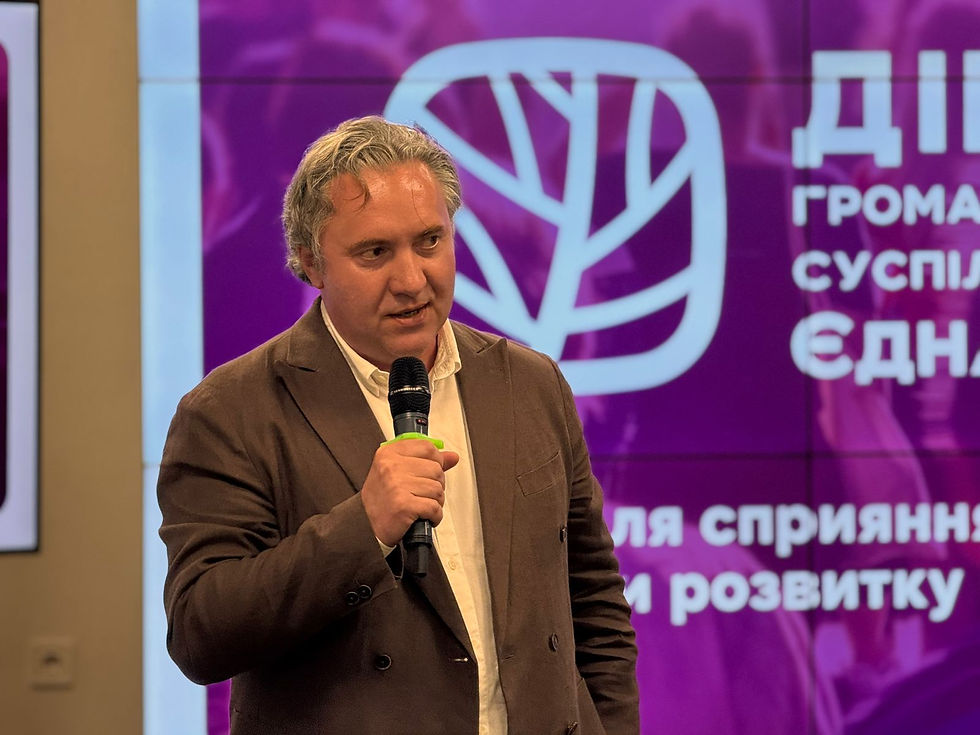
It is highly symbolic that an initiative centred on openness, partnership and shared responsibility is being voiced precisely at the Civil Society House. This once again underlines that civil society in Ukraine is not merely a participant in change, but one of the main drivers of democratic resilience, trust and the new phase of open government, noted Volodymyr SHEYGUS, Executive director of ISAR Ednannia.
During the event, it was noted that the initiatives of the Safe Ukraine 2030 Foundation and the Coordination Council of the Open Government Partnership Initiative in Ukraine had received positive feedback and high recognition from international institutions and organisations, including Ambassador Jouni Laaksonen, Head of the Task Force for the Finnish OSCE Chairpersonship, Klaus Korhonen, Ambassador for Policy Planning at the Ministry for Foreign Affairs of Finland, Chairmen of the Executive Board of the Finnish Institute of International Affairs, and Board Member of the Atlantic Council of Finland. In partnership with the EUFUA platform, communications have been launched and initial targeted outreach letters have been sent to the Political and Security Committee (PSC) and the European Union Institute for Security Studies (EUISS). The organisers are preparing to hold a dedicated expert roundtable in Brussels.
From Principles to Impact
At the centre of the discussion was a key question: what should the next stage of co-creation and responsible partnership look like in a world where war, a crisis of trust, digital threats and the complexity of recovery require not isolated reforms, but a new quality of coordination, responsibility and partnership?


Representatives of the multistakeholder forums of participating countries and the organisers of the event shared their experience of OGP implementation: the United Kingdom - Kevin KEITH, Chair of the UK Open Government Network, Co-Chair of the UK Multistakeholder Forum; Germany - Helena PELTONEN-GASSMANN, Expert in charge for OGP, Transparency Deutschland; Moldova - Veronica CRETU, OGP Envoy, Former Co-Chair of the Moldova Multistakeholder Forum; and Ukraine - Nataliia OKSHA, Secretary of the OGP Coordination Council in Ukraine and Deputy Director of the Department of Information and Communication, the Secretariat of the Cabinet of Ministers of Ukraine, and Olesia ARKHYPSKA, Co-Chair, OGP Coordination Council in Ukraine, Safe Ukraine 2030 Foundation. Participants focused on which OGP results have truly changed the rules of the game, which practices can already serve as models for a new generation of reforms, and how openness, participation, trust and resilience can be brought together in a new architecture of democratic governance. The first 15 years of the Open Government Partnership helped open the state by advancing transparency, access to information, public participation, open data and accountability. Yet today, the assumptions of 15 years ago have changed. Democracy is under pressure. russia’s war against Ukraine continues. Autocratic influence is expanding. Disinformation, institutional capture, polarisation and distrust are weakening democratic systems from within. This means that the next phase of OGP cannot be limited to improving procedures, portals, consultations or datasets. It must become a platform for democratic resilience, trust in public authority and civic courage. And we are faced with a fundamental question: are trust, democratic resilience and responsible partnership truly a goal for our countries - and for Europe in particular?
Not Only About 15 Years - About the Next Step
A separate focus of the event was the presentation of TRUSTA and the discussion of next steps for its further implementation, presented by Olena SUKMANOVA, President of the Safe Ukraine 2030 Foundation. Participants emphasised the need for clearly defined roles, responsibilities and mechanisms for engaging partners at all levels.

Why This Matters for Ukraine
For Ukraine, this dialogue became yet another confirmation that open government and democratic security are not peripheral issues, but strategic ones. The conversation about OGP after 15 years is a conversation about the model of the security architecture of the future. It is about an architecture of democratic security in Europe and the Euro-Atlantic space - an architecture in which countries are strong, open, resilient, secure and capable of building trust not only internally, but also through international partnership.
The strategic dialogue was held at the initiative of the OGP Coordination Council in Ukraine, the Open Parliament of Ukraine Initiative, and the signatories of the Statement presented during the OGP Global Summit in October 2025. The event was made possible with the financial and organisational support of the International Renaissance Foundation and ISAR Ednannia.





The Open Government Partnership (OGP) brings together more than 70 countries and 150 local governments, representing over two billion people, as well as thousands of civil society organisations. It is a unique global partnership that unites powerful forces to advance transparent, participatory, inclusive and accountable governance.


Comments